Heads up: some links on this page are affiliate links (Stay22, Viator). If you book through them we may earn a commission at no extra cost to you. It never changes what we recommend. How this works.
The easiest Maui waterfalls to reach are Twin Falls, Puaʻa Kaʻa Falls and roadside viewpoints along the Road to Hana. For a longer hike, the Pīpīwai Trail leads to Waimoku Falls in Haleakalā National Park. Swimming is possible at some pools when conditions allow, but freshwater swimming carries health risks, and flash floods can turn a calm stream dangerous very quickly.
Quick answer: Twin Falls is the most straightforward waterfall stop near the start of the Hana Highway, but it has paid, limited parking and access rules. Puaʻa Kaʻa has a short walk, restrooms and picnic facilities. Waimoku Falls is a substantial hike, not a quick roadside stop. Don’t enter streams during heavy rain, cross rising water, or swim under a waterfall.
Which Maui waterfall fits your day?
Most Maui waterfalls are on the windward side, especially along the Hana Highway. The best choice depends less on the waterfall’s height than on how much driving and walking you want to take on, and whether you’re prepared to stay out of the water if conditions look questionable. A stop that appears close on a map can take longer than expected on a narrow, winding road.
| Waterfall | Access and effort | Parking or fee notes | Swimming |
|---|---|---|---|
| Twin Falls | Short walk from the designated farm lot; longer routes are uneven | About $10 per vehicle, first come; no street parking | A pool is present, but freshwater swimming has health and flood risks |
| Puaʻa Kaʻa Falls | Short walk within a state wayside park | No entrance fee reported; parking and restrooms at the park | Possible when conditions allow |
| Upper Waikani Falls | Roadside view; no official trail to the pool | Very limited safe stopping space | View it from a legal, safe spot, don’t climb down |
| Wailua Falls | Visible from the road beyond Hana; optional path is slippery | Small roadside area can fill quickly | Not a reason to descend on a slick or unsafe route |
| Waimoku Falls | About 4 miles round trip on the Pīpīwai Trail | Haleakalā National Park admission applies | Stay at the viewpoint; don’t swim at the falls |
| Makamakaʻole Falls | Stream hike with about 13 crossings, away from Hana | No facilities reported; legal parking is essential | Some pools, but crossings and flood risk make this a poor casual swim stop |
These are not interchangeable stops. Twin Falls and Puaʻa Kaʻa are better suited to travelers looking for a short walk; Waimoku is a half-day hiking commitment once you include the drive to Kīpahulu. For more route ideas and realistic time planning, see our Road to Hana guide and Maui hikes guide.
For Twin Falls, recent published guides report about $10 per vehicle, with first-come parking in the designated lot and no reservations. They also report gates opening at 7:10 a.m., last entry at 4:30 p.m., and visitors leaving by 5 p.m.; hours can change with weather or staffing. Check the farm’s current notices before you drive, and take valuables with you because the parking area has had vehicle-break-in warnings. Details are reported by Maui Snorkeling and Love Big Island.
Can you swim in Maui waterfalls?
Sometimes, but “there’s a pool” does not mean it’s a safe swimming spot or that swimming is allowed that day. The Hawaiʻi Department of Health advises against swimming or wading in freshwater streams and ponds because of leptospirosis risk. Bacteria can enter through broken skin and through the soft tissues of the mouth, nose or eyes. Clear water doesn’t rule out the risk.
The practical choice is to skip freshwater swimming if you have cuts or scrapes, especially after heavy rain. If you decide to enter water where access is allowed, cover cuts with a waterproof bandage, keep your head above water, don’t drink stream water, and wear shoes that stay on your feet. Rocks can be sharp, slick and uneven. The health guidance and precautions are summarized in Love Big Island’s waterfall swimming guide and Pride of Maui’s waterfall guide.
Flash flooding is the other major risk. Rain falling miles upstream can raise a stream even when the sky over your trail is clear. Don’t enter a stream during or after heavy rain, don’t cross floodwater, and don’t force a crossing that’s stronger on your return than it was when you arrived. Wait for water to recede or turn back. A waterfall hike is an easy outing to cancel; a stream crossing is not a place to test your judgment.
Never jump from a cliff or use a rope swing. Water depth and submerged debris can change, and a pool that looks deep from above may contain rocks. Stay out from directly under a falling cascade, where water pressure can be intense and rocks or branches can come down. At Waimoku Falls, follow the designated trail and viewpoint rather than approaching the cliff base. The published safety guidance from Maui Snorkeling and Hawaii Magazine emphasizes checking conditions because flash floods and slippery trails can develop quickly.
Before leaving, check the forecast for the whole route and look for current park or trail closures. Twin Falls posts high-water trail closures through its social accounts, according to the published guides. For public trails, check the current status through Nā Ala Hele, the state trail system, as recommended by Maui Snorkeling. If rain is heavy or a warning is in effect, choose a different activity. Our Maui weather guide explains why windward and leeward conditions can differ, but a dry forecast on one side doesn’t guarantee safe stream conditions on the other.
Which Hana Highway waterfalls are easiest to reach?
Twin Falls: convenient, but parking is controlled
Twin Falls is near mile marker 2, just beyond Paia, and is commonly the first major waterfall stop on the Hana Highway. A short walk reaches lower falls and a swimming pool; more exploring can mean uneven ground, mud and stream crossings. Guides describe a shorter visit to the lower falls and a longer route to additional cascades, so don’t assume the whole area is a quick roadside look.
You must use the designated lot. The reported charge is about $10 per vehicle, the spaces are first come, and street parking, walk-ins and rideshare drop-offs aren’t accepted. Published guides report a monthly first-Saturday closure to visitors because the property is reserved for residents. Check the current rules and high-water closures before setting out; the farm’s trail access can change with conditions. The lot also has a farm stand and portable toilets, according to Maui Snorkeling.
Twin Falls suits people who want an early, relatively short stop and are comfortable following the marked route rather than pushing upstream. It’s not a good choice if you expect a guaranteed swim, arrive after the lot is full, or want to park on the shoulder and walk in. Don’t. The narrow highway needs to stay clear, and the property’s access rules are part of the visit.
Puaʻa Kaʻa: the practical facilities stop
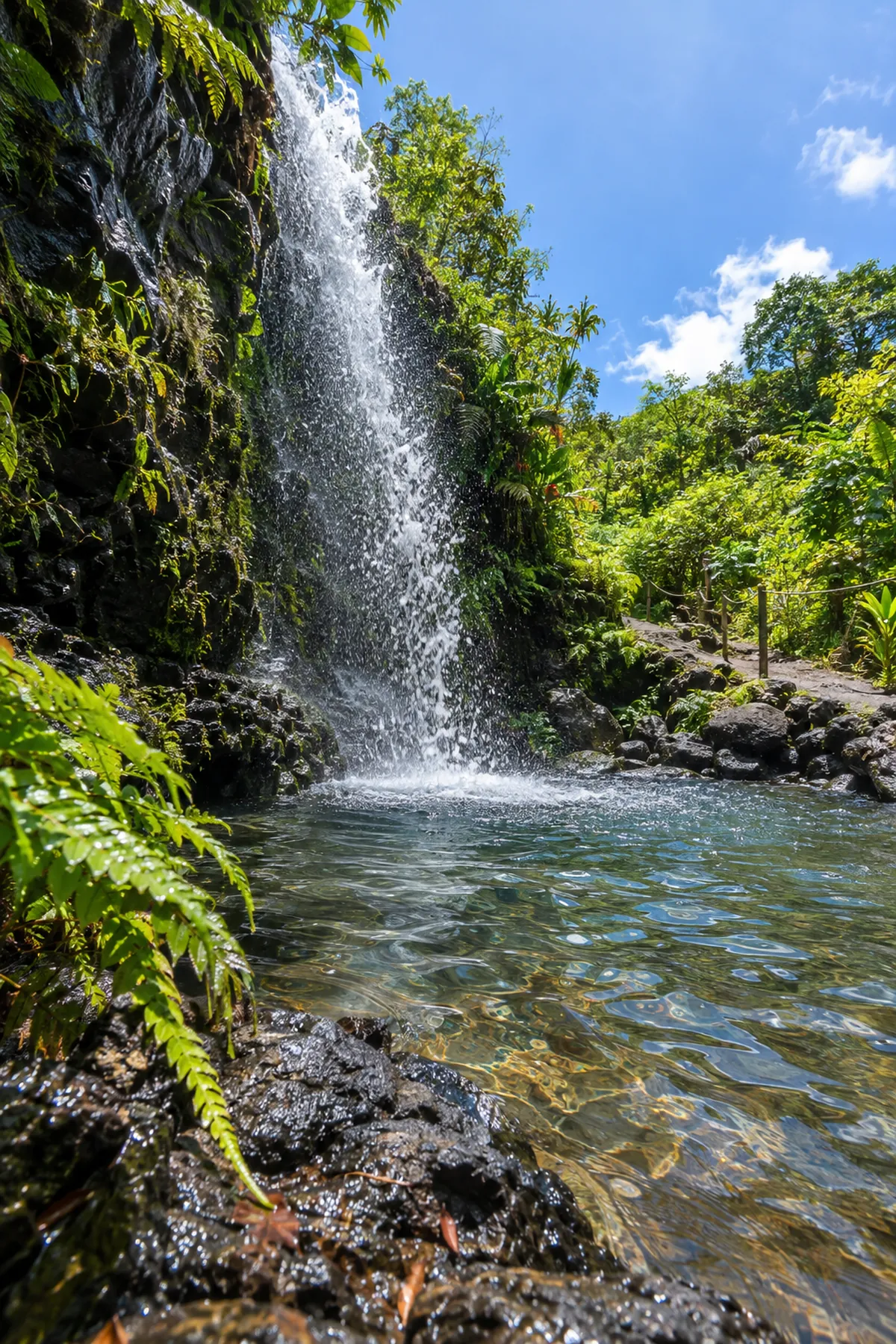
Puaʻa Kaʻa State Wayside Park is about mile marker 22 on the Hana Highway. The lower falls are reached by a short walk from the park area, and the site has restrooms, picnic tables and parking. One guide reports no entrance fee; confirm any current alerts or closures with the park information before relying on the stop. The pool can be a swimming option when conditions allow, but that does not remove the freshwater health risks or flash-flood rules.
There are trails farther into the jungle, but a short, accessible lower-falls visit is the sensible plan for most visitors. More ambitious routes can be slippery, and the second falls route has been described as involving a narrow embankment. Don’t follow an unofficial path just because other people appear to be using it. Access and facilities are described by Maui Snorkeling and Pride of Maui.
Upper Waikani: a view, not a pool hike
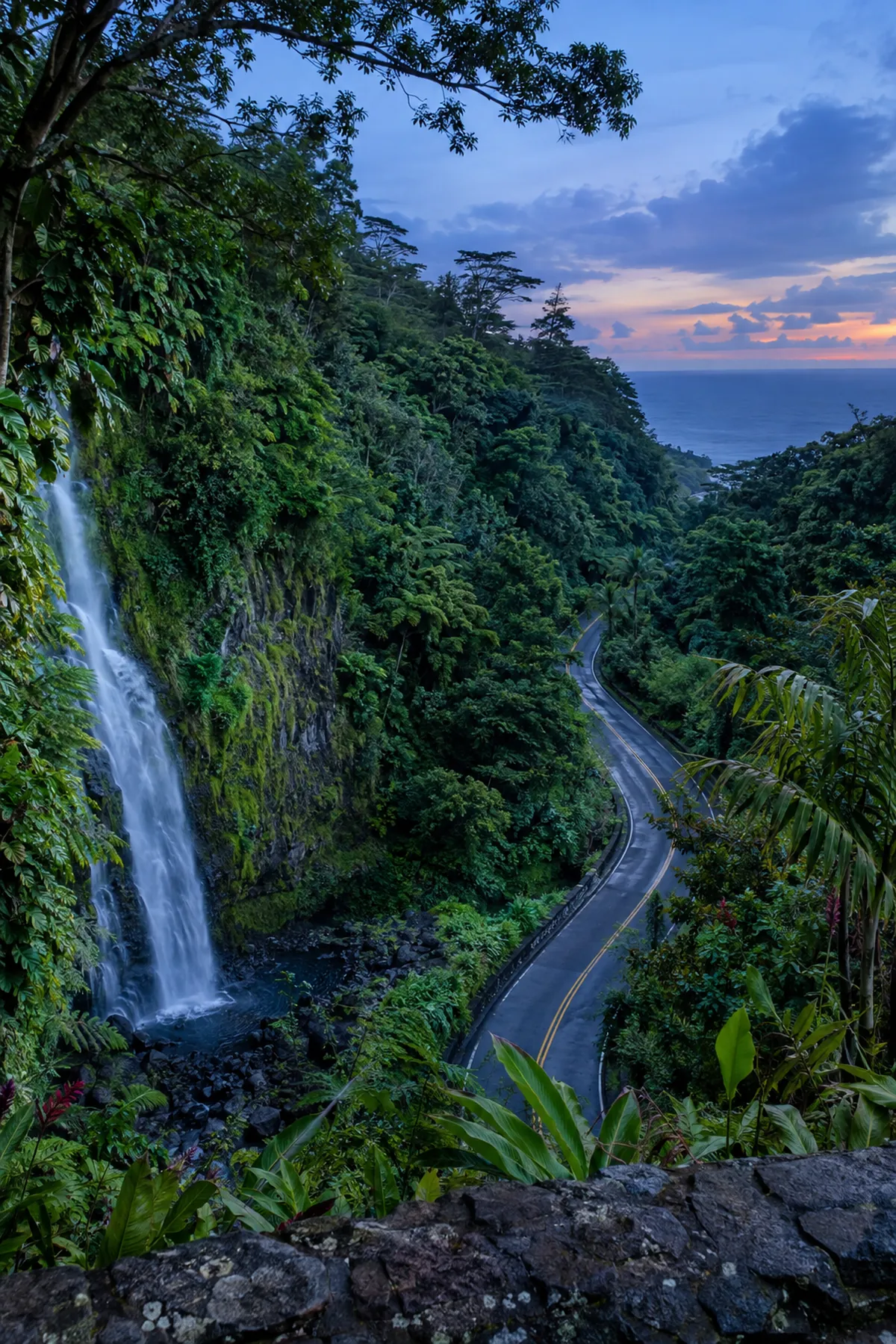
Upper Waikani Falls, also called Three Bears, is around mile marker 19. It’s three side-by-side cascades, visible from the highway. The pull-off is limited, the road is narrow, and drivers may stop suddenly. Pull over only where parking is legal and doesn’t obstruct traffic. If there’s no safe space, keep driving.
There is no state-designated trail to the pool. The unofficial scramble down is steep and slippery, may cross private land, and isn’t part of the Nā Ala Hele trail system. Treat this as a roadside viewpoint, not one of the Maui waterfalls you can swim in. The access warning is detailed by Love Big Island; road-viewing and parking cautions also appear in Maui Snorkeling’s Hana waterfall guide.
What about waterfalls beyond Hana?
Wailua Falls: an easy roadside view
Wailua Falls is beyond Hana, near mile marker 45, and visible from the road. It’s a tall cascade with a small roadside viewing and parking area that can fill quickly. The short path toward the pool can be muddy, steep or slippery, especially after rain. Don’t treat a visible track as an invitation to descend, and don’t stop on a bridge or block the highway for a photo.
Some guides describe swimming at the base when conditions permit, but that’s not a reason to go down when the route is wet or the water is high. The view from the road is enough for a lot of visitors, particularly on a long Hana day. Wailua Falls access and the slippery optional path are covered by Love Big Island’s Maui waterfall guide and Hawaii Guide’s Hana Highway waterfall guide.
Waimoku and Makahiku: the hike worth planning around
Waimoku Falls is in the Kīpahulu District of Haleakalā National Park, south of Hana. The Pīpīwai Trail is about 4 miles round trip and passes the Makahiku Falls overlook and a bamboo forest before reaching the viewpoint for Waimoku. Allow several hours for the hike, plus the drive. It’s a moderate outing with elevation gain and potentially muddy, slippery sections, not an add-on to squeeze into a rushed schedule.
Park admission is required. Published guides report a $30 vehicle fee, but fees can change, so confirm current rates and access with Haleakalā National Park before you go. The same park admission covers the Kīpahulu area and is reported as valid for access to both park districts in the cited guides. There are restrooms near the visitor center and campground area. For trail length, fee information and facilities, see Maui Snorkeling’s Pīpīwai Trail information and Pride of Maui’s Kīpahulu guide.
Makahiku Falls is viewed from an overlook on the same trail, so it’s an option if you turn back before Waimoku. Don’t leave the official route to get closer. At Waimoku, stay at the marked endpoint and respect barriers; rockfalls near the falls have caused fatalities. Swimming at the base is not the plan here. If you want to understand the whole hike and how it fits into a Hana itinerary, read our Pīpīwai Trail guide before you commit to the drive.
Oheʻo Gulch: follow closures, not old trip reports
The Pools of Oheʻo, sometimes called the Seven Sacred Pools, are also in the Kīpahulu area. The paved overlook and short Kuloa Point Trail offer a way to see the gulch without making a long hike. But swimming access depends on conditions and current park restrictions. One recent published account says swimming is off-limits because of risks including flash floods and rockslides, while another says access may be restricted after rain. Check Haleakalā National Park’s current notices and follow the signs on site. Don’t rely on an old blog description that says a pool was open on a previous trip.
A reported park vehicle fee is $30, and the Kīpahulu visitor area has parking and restrooms. Fees and closures can change, so confirm directly with the National Park Service before departure. The closure and fee information is summarized in Islands’ Maui waterfall guide and Pride of Maui’s guide.
Which Maui waterfalls are not on the Road to Hana?
Makamakaʻole Falls is in the West Maui Mountains, northwest of the main resort areas, and is the clearest answer for anyone searching “Maui waterfalls not on Road to Hana.” The route is known as the 13 Crossings hike because it follows a stream and crosses it repeatedly. It reaches a multi-tiered waterfall, but the trail is muddy, the crossings are real, and flash flooding is a serious concern. This is not a quick roadside stop or a beginner’s alternative to Twin Falls.
Guides vary on the route description, with one reporting about 2 miles round trip and another describing roughly 13 crossings to the falls. Treat those as route estimates, not a promise of easy footing or a fixed hiking time. Go only in suitable conditions, wear shoes with grip, and turn around if water is rising or a crossing feels unsafe. There are no facilities reported at the trail, and legal parking matters. Route and hazard details appear in Pride of Maui’s guide and Love Big Island’s waterfall list.
Honokohau Falls is also away from the Hana Highway, deep in the West Maui Mountains. It isn’t a self-guided road or hiking destination; published guides describe helicopter sightseeing as the way to view it, with routes and visibility affected by weather. Confirm with the operator whether the planned route includes a waterfall view, since it isn’t guaranteed. If you’re staying in Kaanapali, Kapalua or Lahaina, this is a very different outing from driving to Hana. For a broader choice of activities, use our Maui things to do guide.
How should you plan a Maui waterfall day?
Choose one geographic area instead of trying to collect every waterfall. Twin Falls is near the start of the Hana Highway; Puaʻa Kaʻa, Wailua Falls and Kīpahulu are farther along the same long route. The road itself is winding, and stopping safely takes time. If you’re driving the full Hana route, use legal pullouts, leave bridges clear, and don’t let a waterfall stop force you to rush the return drive.
For a short visit, choose Twin Falls if its lot and trails are open, or Puaʻa Kaʻa for a simple park stop with facilities. For a substantial walk, set aside time for the Pīpīwai Trail and make the park admission and Kīpahulu drive part of the plan. Upper Waikani is best treated as a brief view only when a safe, legal stopping space exists. Wailua Falls can also be a quick look, but its small parking area may be full.
Recent rain can mean stronger falls, but it also means more mud, stronger streams, and higher flood risk. Drier weather may make some smaller falls weak or dry. Don’t trade safety for flow. Bring grippy footwear, drinking water, a light rain layer, and a bag to keep items dry. Carry out your rubbish and stay off private land. If a trail or pool is closed, move on rather than looking for an unofficial access route.
Keep the day flexible. Check the forecast and current park, trail and road information before leaving, and again if conditions change. A clear sky at your hotel does not tell you what’s happening in a stream basin. If you’re choosing a base for a Hana overnight or a shorter resort-area stay, our Maui area guide compares the main regions. You can also use our Maui itinerary guide to decide whether a waterfall day fits without overloading the trip.
How we researched this
Our editors compared published Maui waterfall and travel guides, including their reported information on Haleakalā National Park, Puaʻa Kaʻa State Wayside, and Nā Ala Hele trail access and safety guidance. Fees, hours, closures and swimming access can change, so use the responsible park, property or trail authority’s current notices before leaving. We did not receive payment from any business mentioned.
Before you go
Pack shoes with grip and assume the rocks will be slippery. Don’t swim or wade during heavy rain, after flooding, or where signs prohibit access; never jump or stand directly under a falls. Park only in legal spaces, don’t block traffic, and turn around if a stream is rising. For most visitors, the smart plan is one accessible stop and one longer outing at most, not a race to every waterfall on the island.
Frequently asked questions
Which Maui waterfalls can you swim in?
Pools are reported at Twin Falls and Puaʻa Kaʻa Falls, and swimming may be possible when conditions and access rules allow. Hawaii’s Department of Health advises against freshwater swimming because of leptospirosis risk, and you should stay out during or after heavy rain.
Is Twin Falls Maui worth visiting?
Twin Falls is a convenient early Road to Hana stop with a short walk to lower falls. Parking is about $10 per vehicle in the designated first-come lot, and the property has access rules and closures to check before you go.
What Maui waterfalls are not on the Road to Hana?
Makamakaʻole Falls is in the West Maui Mountains and is reached by the challenging 13 Crossings stream hike. Honokohau Falls is in a remote valley and is generally viewed by helicopter rather than by road or foot.
Can you swim at the Pools of Oheʻo?
Swimming access depends on current conditions and park restrictions. Recent guides report closures because of flash-flood and rockslide risks, so check Haleakalā National Park notices and obey all signs.
Sources we checked
- Love Big Island: Maui waterfall locations, access and hiking details
- Love Big Island: Hawaiian waterfall swimming advice and Twin Falls rules
- Maui Snorkeling: Maui waterfall routes, fees and safety details
- Pride of Maui: Maui waterfall access, facilities and hiking guidance
- Hawaii Magazine: Maui waterfall hikes and weather cautions
- Hawaii Guide: Road to Hana waterfall locations and road conduct
- Islands: Maui waterfalls, Oheʻo Gulch and Pīpīwai Trail
About this guide
Written and fact-checked by the Maui Hotels Blog editors, an independent team that plans Maui trips from official and published sources. We compared 7 sources for this page, linked each one above, and were not paid by any business mentioned. Prices, fees, hours, reservation rules and ocean conditions change, so confirm with the official source before you go.